Valorant lowest to highest rank challenge in 2026 shows how fast a Radiant smurf climbs
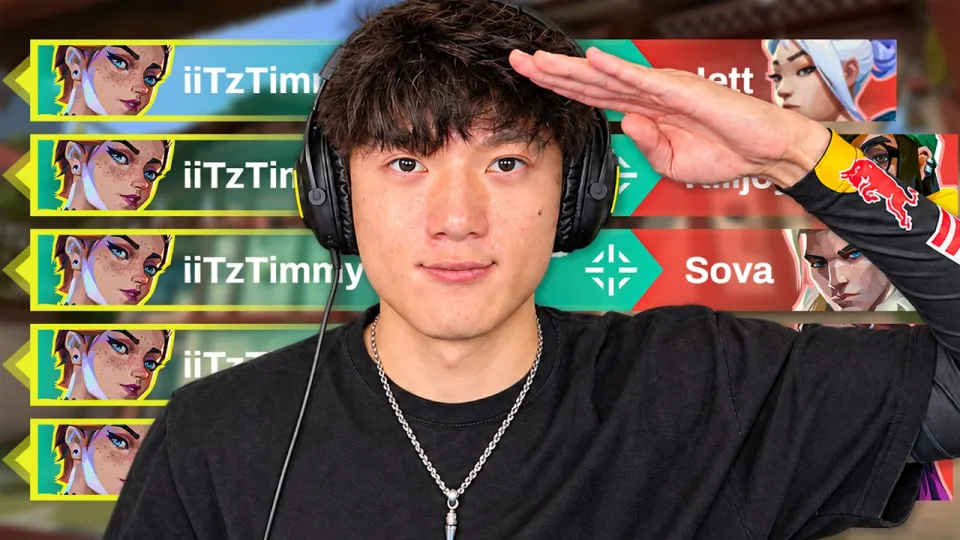
Video: I Might Be Getting TOO Good at Valorant… (Lowest To Highest Rank Challenge)
Want articles like this for your own video to promote it on YouTube and Google? Order them through the Telegram bot @sat_sit_bot. Articles with your video embedded are written and posted by the bot itself — on popular topical sites (no ads). Try it free: 50 articles on us.
· based on the channel iiTzTimmy Two
The Valorant lowest to highest rank challenge is a climb from the bottom of the ranked ladder toward Radiant on a fresh account, and in 2026 it remains the clearest way to see how much of Valorant is decision-making rather than aim. iiTzTimmy Two documents one such run in "I Might Be Getting TOO Good at Valorant… (Lowest To Highest Rank Challenge)", and the full grind continues live on his Twitch channel. The short answer to what the format proves: a genuinely high-level player does not climb because of flick speed, but because low-elo lobbies collapse under basic discipline long before raw mechanics matter.
What the lowest to highest rank challenge actually tests
The challenge isolates one variable — game sense — by removing the usual excuses of a stuck account. A new account starts with unproven MMR, so the matchmaker has no history to work with and the first games are lopsided by design. From there the ladder does its job: every win pushes the hidden rating up, and the opponents get measurably better within a short session.
What the format measures, in order of impact:
- Crosshair placement. Holding the right angle at head height converts every low-elo peek into a free kill, no flick required.
- Economy discipline. Buying with the team instead of forcing rifles every round wins more low-elo games than any individual highlight.
- Utility timing. Smokes, trips and recon that land before the entry, not after the first death.
- Comms hygiene. Short, accurate calls — the exact thing that breaks down in the lobbies shown in the video.
- Mental reset speed. Treating a lost round as data instead of a grievance.
None of those five are rank-locked. That is the whole point: the ladder rewards the player who repeats them, not the player who occasionally out-aims the lobby.
Why low-elo lobbies tilt so easily
The most instructive part of the run is not the aim, it is the teammate behaviour. In the opening game a Cypher player spirals over communication that never happened, nitpicks every call his team makes and blames others for his own entries. A Reyna ends up being the reasonable voice in that lobby, which tells you how far the mental game has slipped.
That pattern is the single most common reason players stay stuck. A tilted teammate stops processing information, starts inventing comms in his head, and then plays around calls nobody made. The fix is boring and effective:
- Mute the noise early instead of arguing mid-round.
- Restate the plan in one sentence before the barrier drops.
- If you are the one entering site, say so before you go, not after you die.
- Take a break after two consecutive rage rounds — the clip is a textbook example of what happens when you don't.
The climb itself: what changes as the lobbies get harder
The difficulty curve in a lowest-to-highest run is not linear. The bottom tiers fall fast because opponents misposition constantly: they hold default angles, dry-peek without utility and stack the same site every round. A disciplined player reads that within two rounds and farms it.
The middle of the ladder is where the challenge tightens. Opponents start trading kills, use their ults with intent and punish a solo entry. That is the point where a smurf has to actually play the map rather than the lobby — defaulting, taking space with utility, and calling rotations. By the top of the climb the edge comes down to details most players never practise: off-angle timing, retake coordination and knowing when not to take a fight at all.
One recurring theme in the run is how much of the advantage comes from information. A player who knows where the enemy is standing wins duels before they start, which is why the higher lobbies look slower and more deliberate than the low ones.
Common questions from the climb, answered
Viewers of the run keep landing on the same handful of topics, and they map neatly onto problems any ranked player faces.
"Is the climb just smurfing?" Effectively yes, and that is the format's value: it shows the gap between ranks in a controlled way. The account is new, the skill is not, so the early games are a demonstration rather than a fair fight.
"Why does my aim look fine but my rank doesn't move?" Because aim is the entry ticket, not the differentiator. The players climbing in this challenge win rounds with utility and timing before a duel even happens.
"Do I need high FPS to climb?" No, but it helps consistency. Smooth frame rates remove variance from your reactions; they do not replace crosshair placement.
"What about the teammates who refuse to comm?" Play around them. Ping, use the map, and take the roles that do not depend on a follow-up call. The Cypher clip is what happens when you wait for someone else to fix the lobby.
Useful links
- Watch the climb live and catch the next session: https://www.twitch.tv/iiTzTimmy
- Short updates between streams: https://twitter.com/iiTzTimmy
- Clips and behind-the-scenes posts: https://www.instagram.com/iiTzTimmy/
- Short-form highlights: https://www.tiktok.com/@iiTzTimmy
- Community and queue-up channels: https://discord.gg/iitztimmy
What the run says about climbing in Valorant
The lowest to highest rank challenge works as a diagnostic because it strips away everything except repeatable habits. iiTzTimmy Two presents the climb as entertainment, but the underlying lesson holds for anyone stuck in Silver or Gold in 2026: the ladder moves when your decisions stop depending on your teammates' mood. Fix crosshair placement, buy with the team, call before you commit, and mute the player who is arguing with comms that were never sent. Then keep going — the format only looks effortless because the fundamentals are automatic. For the live version of that grind, follow https://www.twitch.tv/iiTzTimmy and watch the next account climb from the bottom.
Key takeaways
- The challenge format: start at the bottom of the Valorant ranked ladder and climb toward Radiant on a fresh account.
- iiTzTimmy Two documents the run, with the full climb also streamed at https://www.twitch.tv/iiTzTimmy.
- Low-elo games are decided by mental first: a Cypher teammate tilts over missing comms and invents calls that were never made.
- Rank is a proxy for consistency, not aim: crosshair placement, economy discipline and utility timing carry more weight than flicks.
- Queueing with a fresh account resets MMR, so early lobbies feel trivial before the matchmaker catches up.
Questions & answers
What is the Valorant lowest to highest rank challenge?
It is a ranked climb on a fresh account, starting at the bottom of the ladder and pushing toward Radiant. Because the account has no match history, the matchmaker places the player in low lobbies first, and the rating rises with each win. The format is used to show how much of Valorant is game sense rather than raw aim.
Why do low-elo Valorant players tilt so easily?
Low lobbies often break down over communication rather than mechanics. Players argue about calls that were never made, nitpick teammates and then play around imaginary information. Muting early, restating the plan once before the round and taking a break after two angry rounds fixes most of it.
Does aim or game sense matter more for climbing ranks?
Game sense carries further. Crosshair placement, buying with the team, utility timing and accurate comms all convert into rounds without requiring elite flicks. Aim sets your ceiling, but repeatable decisions set your rank, which is why disciplined players pass through the middle tiers quickly.
Can a new account really reach Radiant quickly?
A new account climbs fast at first because the matchmaker has no history and the early opponents misposition constantly. Progress slows in the middle tiers, where players trade kills and use utility properly. Reaching the top still requires consistent performance across many games, not a single hot streak.
Source: I Might Be Getting TOO Good at Valorant… (Lowest To Highest Rank Challenge) · Markdown version